
Manning Madness

Protecting nuclear plants against national or sub-national terrorist organizations is a federal responsibility. Nuclear power plants shall be required to provide only normal industrial security similar to large chemical facilities and dams. [Nuclear Reorganization Act, Section 605(e)]
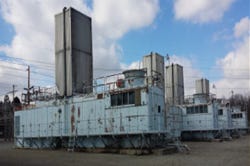
Figure 1.Yankee Station: 147 MW peaking plant south of Dayton. Staff: 0.
Many gas peaking plants are unmanned, operated remotely. They can make several hundred starts and stops a year. Big (800 MW) Combined Cycle plants operate with three people on shift. They will often cycle one or more units on and off daily. Coal plants are burdened with a number of high maintenance components in the fuel handling and pollution abatement systems. The 450 MW Riverbend coal plant in North Carolina operated with a total of 14 people per shift.\cite{cravens-2008}[p 195].
Nuclear plants in the USA do almost no load following. No coal yard, no pulverizers, no SCR’s, no bag houses, no big fans, no scrubbers. Between refueling outages, they don’t handle any fuel. The whole fission island is pretty much off-limits during operation. The turbine hall and switchyard have no more moving parts than a coal plant’s turbine hall and switchyard. Nuclear plant manning should be somewhere between a gas plant and a coal plant. 10 people per shift would be plenty. 3 is possible.1 We would need to support these people with perhaps 20 day workers per site, although some would not need to be on site and could support multiple plants.2
Early nuclear plants came close to this level of manning. When the 180 MW Yankee Rowe began operation in 1960, the total staff numbered 65. US Navy submarines have a nuclear division of less than 40 men.
The choir will probably not be surprised that under the NRC current US manning levels are somewhat higher than this. But did you know “somewhat” is more than a factor of ten? A typical single unit nuclear plant has a payroll close to 1000. The two unit Diablo Canyon plant has a payroll of about 1400. The three unit Palo Verde plant has about 2100 employees. The basic functions have not changed at all since 1960; but our ability to automate those functions has improved drastically. The head count should have gone down.
This was proven in Spain during Covid. Spain has three nearly 1 GW nuclear plants on two sites near Barcelona: Vandellos 2, Asco 1, and Asco 2. Normally these three plants employ 850 people, far less than USA practice. When COVID-19 came along, the plants were instructed to keep all non-essential employees home. Turns out only 120 people were needed to man the three plants.\cite{lavangardia-2020} Each reactor was being operated by 40 people, about 13 people a shift.
It is impossible to figure out what the non-essential people do. They have a bewildering, overlapping collection of job titles. Here’s the IAEA’s list:
Admin/Clerical, Alara, Budget/accounting, Chemistry, Communications, Computer Engineering, Contracts, Decon/radwaste, Design/drafting, Document control/records, Emergency Preparedness, Environmental, Facilities, Fire Protection, Health Physics Applied, Health Physics Support, Human resources, Information management, Licensing, Maintenance/Construction, Maint/Construct Support, Management, Management Support, Materials management, Mods Engineering, Nuclear Fuels, Nuclear Safety Review, Operations, Operations Support, Outage Management, Plant Engineering, Procurement Engineering, Project management, Purchasing, QA, QC/NDE, Reactor Engineering, Safety Health, Scheduling, Security, Technical Engineering, Training, Warehouse.
In 2009, the IAEA figured this added up to 732 jobs for a 1 GW plant. In the US a favorite title is Work Control. As many as 200 people are doing Work Control at a site. I have almost no idea what Work Controllers control, but I’m pretty sure it’s not real work.
We can date some of the big jumps in staffing. According to Navigant, median nuclear plant staffing in the 1975-1979 was 241 people. In 1980-1984 after Three Mile Island, this jumped to 426, but INPO pressure abetted by high gas prices, pushed this up to 913 people in 1990-1995. Navigant says:
The 1979 accident at Three Mile Island brought radical change to the nuclear utility industry and the NRC. Nuclear plant staff doubled or tripled in size to keep up with the wave of new regulatory requirements imposed by the NRC and self-imposed on the industry by the Institute for Nuclear Power Operations (INPO).\cite{navigant-2013}
This fourfold increase matches the Yankee Rowe experience. What the the plant was prematurely shut down by bogus UCS claims in 1992, the original 65 head count had jumped to 265.
The other big event was 9/11. Prior to 9/11, plant security personnel numbers had gradually increased from a handful of gate guards to a small army. Diablo Canyon in 2000 had a security force of about 100 armed guards and 200 unarmed guards.3 After 9/11, the security force at Diablo Canyon doubled. Weapons were upgraded, and Force on Force exercises intensified. It is not clear how realistic the latter are. The NRC is so paranoid that a mock attacker might do something that creates even a tiny chance of an upset, that the Red Team has very strict rules of engagement. For one thing, the plant is alerted ahead of time, so it can set up a dual team:
1) one group “participates in the inspection”, and tries to thwart the attacker,
2) the second group protects the plant while all this is going on.
The exercise weapons are painted a different color to avoid any unfortunate mixing of the groups. The blanks can’t be fired if target is closer than 10 feet. Instead you yell “Danger close” and a referee decides who is dead. Whenever an exercise gets to the point that something bad could happen, it’s put on hold and goes to Table Top mode, where “the participants verbally step through the sequence”.\cite{inl-2020}[p 11] The drills may be highly choreographed and not that realistic; but they are expensive and eat up lots of high priced man-hours. The attacking Composite Adversary Force (nee Composite Adversary Team (CAT)) can comprise up to 12 people. 80 to 90 plant staff are needed to support the exercise.\cite{inl-2020}[p 5] Some utilities maintain their own in-house CAT. Figure 2 is Dominion’s CAT in full regalia.
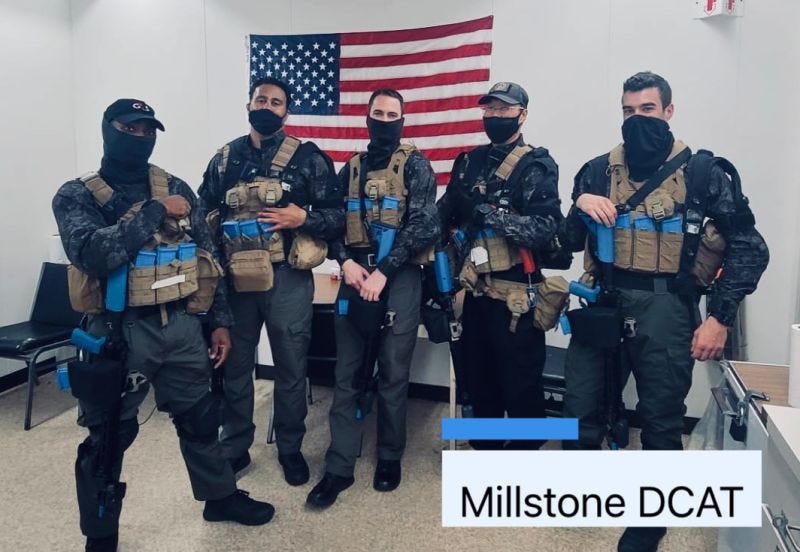
Figure 2. Dominion’s Composite Adversary Team. Check out the pistols. The weird blue color means that this is a mock weapon. The blank magazines are also painted bright blue.
These multi-hundred man armies are nonsense on at least three levels.
1) The threat is not a CAT team sneaking through the woods. It’s drones and precision bunker busters. Cheap drones can make an Abrams tank cower ten miles behind the fighting. The only defense against a modern bunker buster is the knowledge that spread out radiation is not particularly harmful.
2) Neither terrorists nor China are going to attack a nuclear plant. Terrorists won’t because nuclear plants are naturally hard targets.4 In 1982, the Pacifist and Ecological Committee fired five RPG-7 rockets at the Superphenix plant. These things can take out a tank. At least two rounds hit. There was negligible damage.5 The Chinese won’t because they want the plants around when we are a Chinese agricultural colony. For both adversaries, far easier to go after the transmission grid.
3) The only reason why they might go after a nuclear plant is psychological, an attempt to take advantage of our radiophobia. The defense is to get rid of the radiophobia, not feed it by claiming we need multi-hundred man armies to attempt to prevent the unthinkable.
The difference between Diablo Canyon’s 1400 person payroll and a reasonably sized work force of say 140 people, is roughly 1 cent/kWh. In a world where new nuclear power in the West costs more than 15 cents per kWh, you might regard that to be affordable. But that kind of thinking is why nuclear power costs 15 cents instead of the 3 cents per kilowatt-hour real, it did, can, and should cost. We must force nuclear plants to compete on an even playing field with the other sources of electricity and each other to get rid of this waste, and put those five strong young men on the Dominion CAT to more productive use.
They would need to be supported by traveling teams for handling the refueling outages. But since the refueling outage takes roughly two weeks every two years, one team could support something like 30 reactors. Technologies which use on-line refueling may need a few more day workers but less outside support.
I’d devote 2 or 3 people to community outreach: giving tours, organizing tournaments and picnics on the plant grounds, scheduling operator talks to community groups and schools, etc.
You are probably asking what’s an “unarmed guard”? How’s he going to fend off a determined terrorist? These people are watchers. They sit around watching TV’s, or a normally locked door that has to be opened for maintenance, or isn’t latching correctly. I’m not making this up.
The soft spots are Station Black Out for non-passive shutdown plants and spent fuel pools for plants with exterior pools using dense packing. The former can be remedied by Flex equipment and design; the latter by sensible operation.
The pacifist triggerman was later elected to the Swiss parliament. And you thought the Swiss were smarter than us.
Jack - One quick correction - As of ~2011, submarine nuclear engineering divisions are staffed with about 40 people, not 40 men.
It was an important, long overdue change.
Yes and watching the YouTube channel smarter every day, I realize the union support that ALARA is. The allowed radiation levels force multiple people to do work one person could do. Not safety for people but safety for jobs.