
Conflating No Detectable Harm with Zero Harm and the Second Elephant

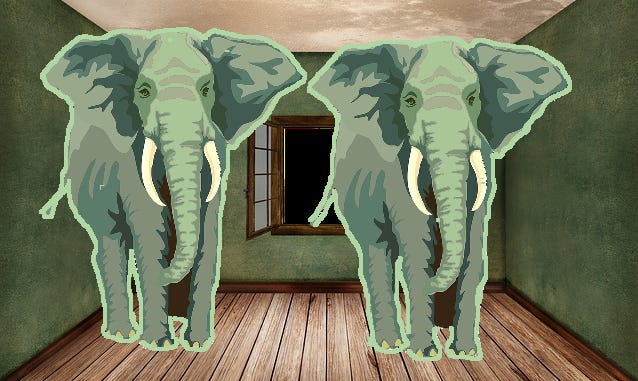
Figure 1. Rogue Reg on the left; Rogue Tort on the right.
A recent post on the Gordian Knot News, The Biological Argument Against LNT prompted an exchange, which I think is important enough to be promoted to a article. For background, Herschel Specter is a nuclear engineer who has had a long impactful career. He led the argument against the Indian Point closure, and has been instrumental in getting New York to start shifting slightly away from its suicidal energy policies. Hershel supports a radiation harm model that claims zero harm up to 20 mSv/d. He and most of his fellow thresholders are confusing no detectable harm with zero harm.
Here’s the exchange. You need to know that LNT is the radiation harm model that is the foundation of our auto-genocidal radiation protection regulation. LNT is based on the premise that our bodies cannot repair DNA damage. SNT is a simple harm model that recognizes this ability. I’ve added a bunch of explanatory footnotes for people who have not been exposed to as much nuclear power nonsense as the two debaters.
Herschel’s Complaint
Jack,
I think that this discussion is incomplete and should add the insights from your “Eben Byers and radiothor”. You said that “Strong evidence that our bodies can handle dose rates up to at least 20mSv/day.” I can identify others that support this observation. One doesn’t need to know the precise dose rate that is the upper range of what is safe. Just put in near zero radiological health effects below 20 mSv/day and it would show that virtually all low dose health effects models that indicate non-zero health effects in this range are wrong.
Herschel
My reply
Herschel,
As an engineer, you understand scientific notation. You know that 1.0e-16 is a number very close to zero.1 If that number is a risk, it is negligible. We can go about our daily business as if that risk did not exist. But 1.0e-16 is not zero. Relatively it is as far from zero as is 1.00.2 If you make a claim that a risk is zero, when it is actually 1.0e-16, that claim is logically false. You are telling a lie.
Now to your attempt to put words in my mouth. A repair system that can “handle” dose rates up to 20 mSv/d means that repair system can keep the inventory of currently unrepaired double strand breaks(DSB) near background level, and crucially can keep that inventory from growing.3
But near background level does not mean at background. The increased rate of DNA damage means the equilibrium inventory of DSB’s with 20 mSv/d will be higher than the equilibrium level of DSB’s without the extra damage. That increase in the equilibrium level of DSB’s increases slightly the chance of a double DSB and the risk of cancer.
The increase may not be much. SNT regularly comes up with numbers that are so small they cant be represented in 64 bits, numbers smaller than 1.0e-16. It certainly won’t be detectable. But it’s not zero. And I have never claimed it was.
The polite way to describe your position is that you are are confusing undetectable harm with zero harm. The defenders of LNT will call it a lie. And they have a case. A good enough case that we lose the public argument against LNT.
Jack
Some additional commentary
Herschel, like most thresholders, does not really believe there is absolutely zero harm up to his threshold of 20 mSv/d. His writings will sometimes say “zero harm”; but they also often talk about “no detectable”. I think if he were pressed he would say something like “No detectable harm is effectively zero harm” and in some ways it is.
But the LNTer’s won’t allow us to get away with such sloppiness. As soon as you say zero harm, they pounce and say prove absolutely zero harm. When you admit you didn’t really mean absolutely zero harm, your credibility is in tatters and your threshold model is logically false. Far, far smarter to accept the No Threshold doctrine from the start, deny them this effective weapon, and put the focus back on LNT and it’s denial of indisputable biology.
The Second Elephant
In my reply to Hershel, I did not address his claim that we don’t really need a full replacement for LNT, a model that can convert any dose rate profile into a prediction of cancer incidence. It is theoretically possible to regulate nuclear power without such a model. You could not do any cost-benefit analyses; nor compare nuclear’s benefits and risks with power sources that have other sources of health risk; nor convert risk limits to dose rate limits; but you might be able to come up with an ad hoc, inconsistent collection of rules, and muddle through from a strictly regulatory point of view.
Even if that were the case, there’s another elephant in the room: the American tort system. Right now a sizable release in the USA is indeed intolerable. It’s intolerable not because of any radiation harm, which is very likely to be undetectable as it has been at Fukushima, but because of the dollars.
Deepwater Horizon has cost BP in excess of 20 billion dollars for an oil spill. Can you imagine what the American ambulance chasers would be with a Fukushima? Under the American tort system, we can confidentially predict there will be hundreds of billions of dollars in claims, quite possibly a trillion from a large release, even one with no detectable radiation harm. No economically viable industry can operate under such a threat.
If we are to have anything close to should-cost nuclear in the United States the American tort system must be avoided. The only way we can do that is a government mandated radiation exposure compensation program. The Nuclear Reorganization Act lays out such a plan. But to implement it, we must have a way of estimating each person’s harm, his Lost Life Expectancy, associated with the dose rate profile he was exposed to. We must have a well defined radiation harm model that can implement the compensation plan. Otherwise nuclear in the US will remain a prohibitively expensive, taxpayer ripoff with geopolitical implications.
1.0e-16 = 0.000,000,000,000,0001 or 1 in ten quadrillion.
1.0e-16 / 0.0 and 1.00 /0.0 are both infinite. Numbers that are very close together in absolute terms, can be extremely far apart in relative terms. This is important in understanding the difference between radiation harm models at low doses. The average background dose rate on this planet is ~0.006 mSv per day. The LNT cancer mortality for that dose is 3.00e-7; the SNT mortality is 3.06e-12. Both are very small numbers but the LNT mortality is 100,000 times higher than the SNT mortality.According to LNT average background radiation rate is killing 2,400 humans each day. According to SNT that dose rate is killing 0.024 humans each day.
Nature has provided us with a remarkably effective DNA repair system. She had to do that to protect us from our own oxygen based metabolism, which creates double strand breaks (DSB) in our DNA helix at a rate which is about 25,000 times the Double Strand Breakage rate from average background radiation.
The one form of damage which this system does not handle near perfectly from the point of view of cancer is closely spaced DSB’s, known as Double Double Strand Breaks (DDSB’s), When two DSB’s are close enough to each other, the system can end up rejoining the wrong ends. Some of these mutations will be viable, and few of these will result in cancer.
Repair takes time. If the damage rate is so high that the DSB repair system can’t keep up, the inventory of currently unrepaired DSB grows, and with it the probability of a Double Double Strand Break and cancer.
I, too, decry the US tort system that awards billions just for 'failure to warn", even though NO evidence of harm from Roundup was found. If the future US builds a thousand nuclear power reactors there will be accidents with radiation releases. Perfection is impossible. Radiation harm to health will be very unlikely, as shown at Fukushima. To provide low-cost, ample nuclear power we must educate citizens and legislators about radiation effects and limit compensation to real harm. More at https://hargraves.substack.com/i/176322713/accident-insurance
Why does an alternate radiation harm model have to be perfect? The ruling model is so flawed you can write a book about it - and you basically did.
No scientist with any professional integrity would claim that radiation effects are linear and that dose rate doesn't matter, while accepting and using fudge factors such as DDREF. Dose rate rate doesn't matter, if we apply this here fudge factor to correct for it. Really, 1+1=20 if we apply a factor of 10 correction over it. Riiiight. A toddler can see the flaws in the argument yet we have entire scientific committees, regulators and businesses that continue to cling to LNT.
LNT-ers set out to prove that the effects must be linear, so they will apply fudge factors and arbitrary binning and various statistical techniques of tomfoolery to obfuscate and bebother. Even then often the correlation is so poor that it must be rejected, so they will - radiation effects are linear so any study that shows they aren't is rejected to prove that it is.
LNT is politically motivated. It is not about real science.
As to the common man and woman, they are not interested in word smithing or the umpteenth decimal. That comes across as lawyer-esque, desperately trying to defend something bad. Scientists think in terms of probabilities but not Jane the housewife. She just wants to know, are my children safe. I like to use the term 'harmless'. A single drop of wine could cause cancer, but any normal person knows that a drop of wine is harmless. We know that radiation doses on order of 1 or 2 mSv per day are harmless, even when sustained indefinitely. Parents be comforted.