
Nuclear power not only can and should be cheap. It was cheap. 3 cents/kWh cheap.

Contrary to widely held belief, nuclear power is not now `dirt cheap’. ... At best, both [nuclear and coal] produce power for approximately 4-5 mills per kilowatt-hour.[Paul Ehrlich, 1970]
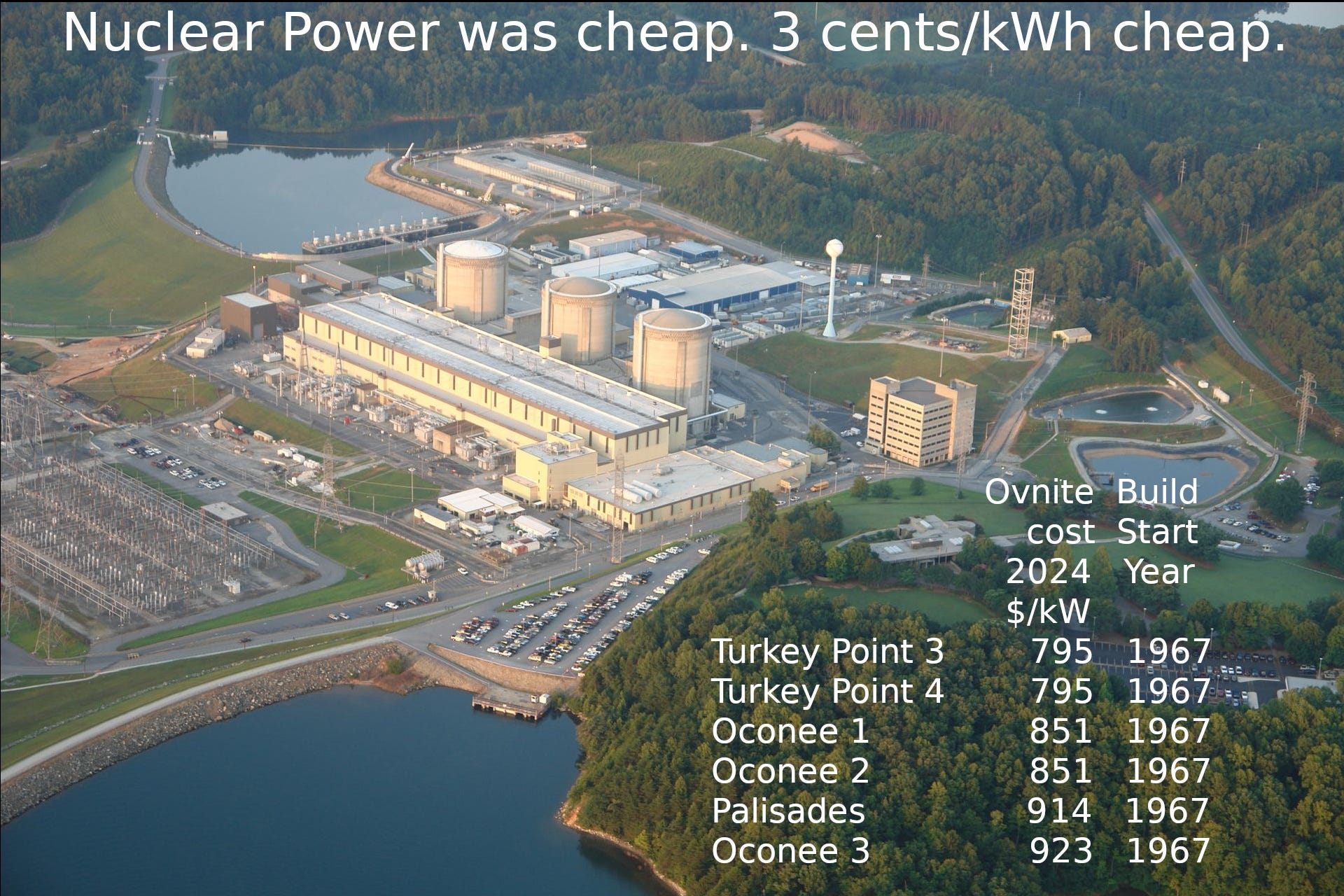
Figure 1. The 2.5 gigawatt Oconee plant in South Carolina. These three reactors were built for just over 350 million dollars between 1967 and 1974. That’s $1141 per kilowatt in 2024 dollars. They took about 6 years to build. Oconee can produce reliable, on-demand, zero pollution, very low CO2 electricity at less than 3 cents/kWh in today’s money. Oconee’s average capacity factor over the last 5 years was 98.2%. All three of these reactors have been licensed into the 2050’s, a gift from the Greatest Generation. Oconee and its cooling pond Lake Keowee have turned a depressed part of western South Carolina into a second home and tourist magnet.
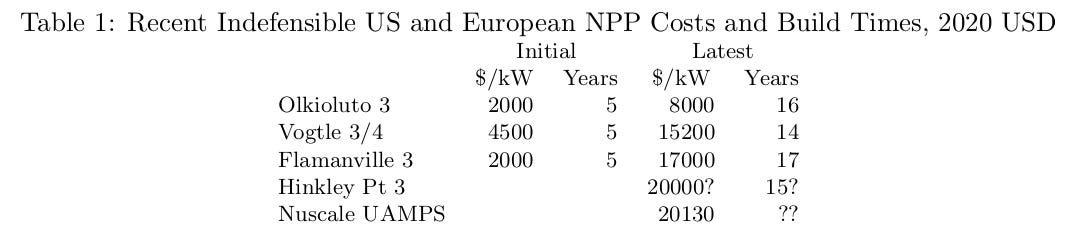
Nuclear power in the West is a disastrously expensive mess. Table 1 shows where we are. Current builds have capital costs that are more than ten times higher than Oconee and her sisters. Only the wealthiest nations can afford these kind of costs, and then only sporadically. The construction times are such that there is no way nuclear can put a dent in global warming, or anything else. And it keeps getting worse. If this is the way things must be, nuclear power is a dead end, and rightly so.
But does it have to be this way? A 1 GW coal plant must process, dry, and pulverize roughly 7000 tons of coal per day. This coal is fed from a 30 hectare (70 acre) yard, Figure 2, dried, pulverized, and mixed with over 77,000 tons per day of heated air that has been pushed into a 90 meter high boiler by immense forced draft fans. The coal yard in turn must be fed by a 100 car train nearly every day or a 150,000 ton bulk carrier every two or three weeks. Often the coal has been transported thousands of miles from a huge open pit mine.
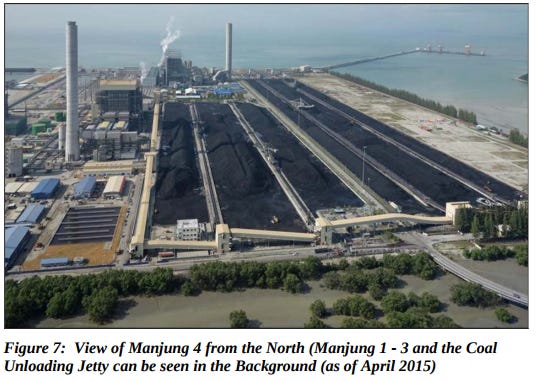
Figure 2. Manjung 4 coal plant looking seaward. The plant itself is on the left behind the stack.
For an average good coal, the process produces roughly 1100 tons a day of solid waste (mostly fly ash) and 200 tons per day of sulfur dioxide. The 84,000 tons per day of stack gas is pulled though an air heater, a SCR unit to remove most of the NO2, a giant baghouse or electrostatic precipitators to remove most of the particulates, and pushed into a scrubber by immense induced draft fans, to remove most of the SO2. SCR (Selective Catalytic Reduction) requires ammonia be sprayed into hot flue gas, and then the gas be directed through a catalytic honeycomb which must be kept free of plugging with sootblowers and sonic horns. The baghouse or precipitators require shakers or rappers to remove the ash, most of which goes to landfills or slurry ponds. Scrubbers require about two tons of pulverized limestone per ton of sulfur in the flue gas. They are high maintenance, energy intensive units. They add a little CO2 to the stack gas. Finally, 18,000 tons per day of CO2, and about 10% of the Gross Calorific Value of the coal is spewed out of the top of a 170 m high stack. The stack height is required to dilute the remaining pollutants in the gas.
Yet in 2015, the German utility RWE commissioned their Eemshaven plant in the northeast corner of Holland at a cost of 2.2 billion euros. This is a little under $1500/kW for a 2 by 800 MW plant, or just under $2000/kW in 2024 dollars. This is for the latest and greatest ultra-super-critical plant meeting stringent EU pollution limits, sited in one of the most expensive places to build on the planet. The rule of thumb is $500/kW for the turbine hall and switchgear. The rest is fuel handling, the boiler, and pollution control.
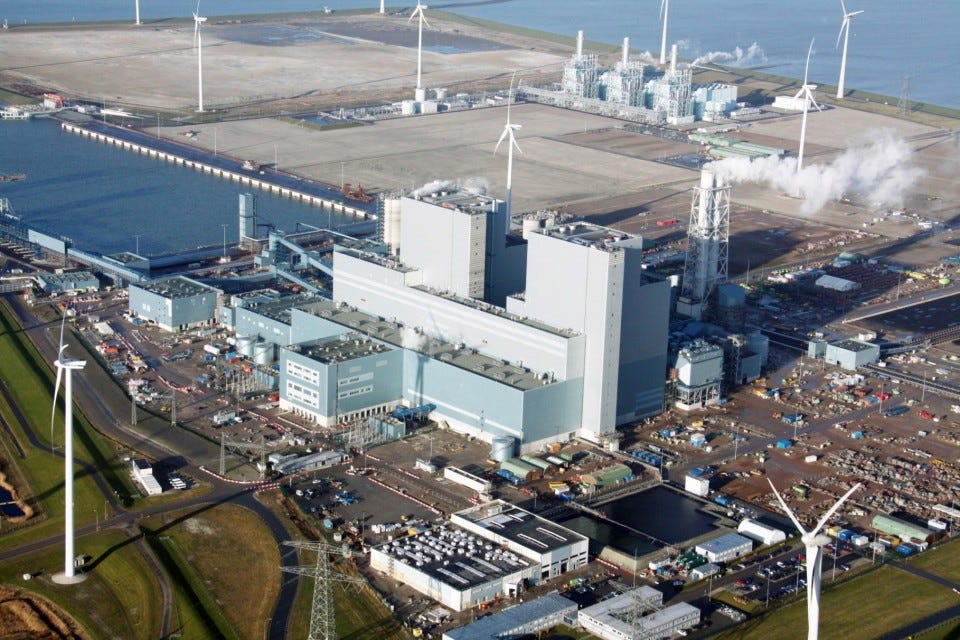
Figure 3. Eemshaven: 2 by 800 MW USC coal plant, 46.2% efficiency. Turbine hall (blue) much smaller than boilers (white).
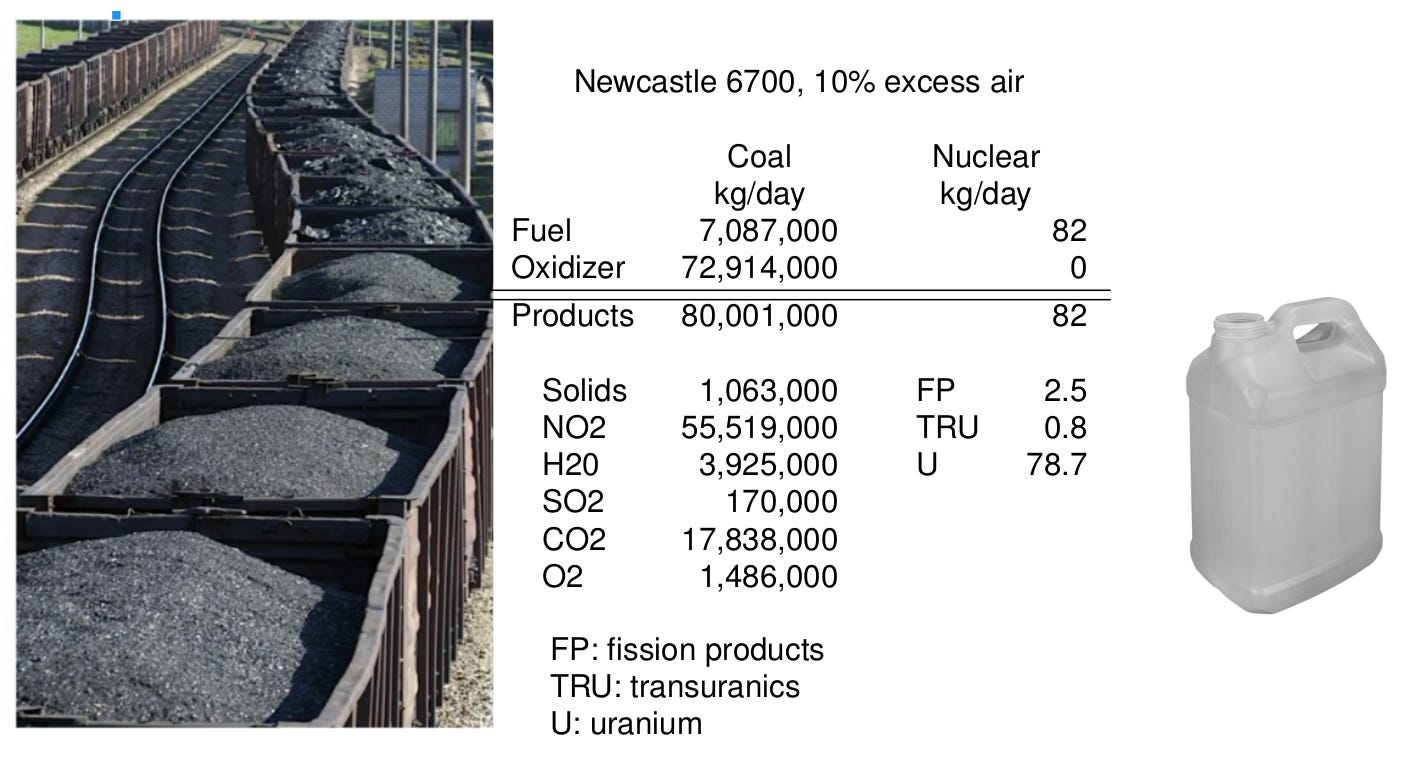
Figure 4. Fuel for 1 GW plant for one day. The coal plant’s fuel requires a 70 car train. The nuclear plant’s fuel fits in a two gallon jug. Newcastle 6700 is a good coal. Most coal’s are worse.
A 1 GW nuclear, Figure 5, plant will burn about 82 kg’s of fuel per day, producing the same amount of solid waste. That’s about 100,000 times less than a coal plant. The coal yard and the coal receiving terminal disappear, as do the dryers and pulverizers. The nuke’s Fission Island volume will be smaller than the coal plant’s boiler. The turbine hall will be slightly larger. There will no stack gas handling equipment, no massive Forced Draft and Induced Draft fans, no SCR, no baghouses, no scrubbers, no massive stack. The ash landfill and slurry pond will be replaced by less than an acre of 5.9m(19 ft) high by 3.5m(11 ft) diameter casks. The nuclear plant should be cheaper to build with far cheaper fuel costs.
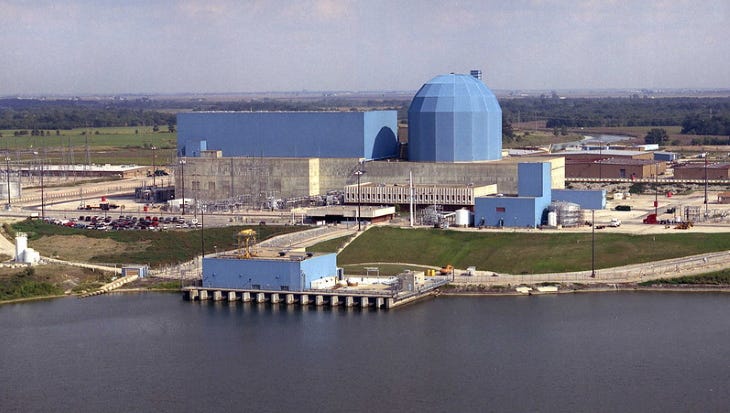
Figure 5. Clinton Power Plant, 1068 MWe, no coal yard, no boiler, no SCR, no baghouse, no big fans, no scrubber, no big stack. Clinton sits on a 5000 acre artificial lake, which serves as its cooling pond. The lake is surrounded by trails, beaches, and a wildlife preserve. It supports active rowing, fishing, and sailing communities. Every fall the lake hosts the Glow Regatta, which attracts sailors from all over the Midwest. Glow is short for Glow-in-the-dark, a cheeky thank you to the lake’s mother.

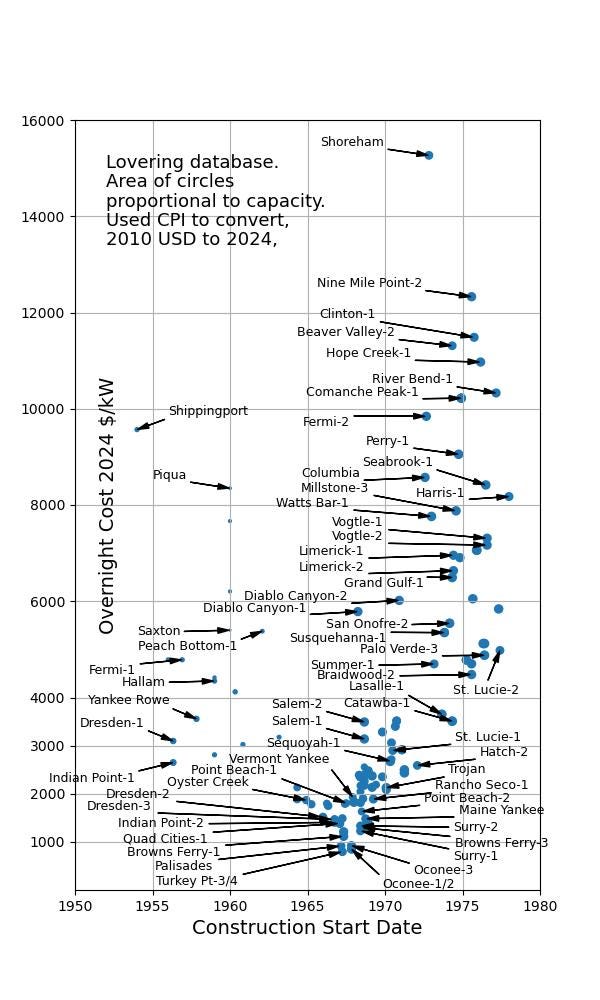
Figure 6 Overnight Cost, USA Nuclear Power Plants, adapted from \cite{lovering-2016}}
Indeed, in the 1960’s, nuclear’s 100,000 to 1 advantage in energy density allowed nascent nuclear power, which was just starting down a steep learning curve, to go head to head with coal. In 1965, GE was able to show TVA that it would produce electricity for less than 3.7 mills per kilowatt hour.\cite{bupp-1978}[page 90] That’s about 3.2 cents per kWh in 2024 dollars. Komanoff, no friend of nuclear power, estimated nuclear’s 1971 CAPEX at 366 1979 dollars per kW, and coal without scrubbers at $346/kW.\cite{komanoff-1981}[p 20] Nuclear’s fuel cost advantage tipped the cost of electricity in favor of nuclear. In 1970, Paul Ehrlich, a determined foe of nuclear on Malthusian grounds, complained ``Contrary to widely held belief, nuclear power is not now `dirt cheap’. ... At best, both [nuclear and coal] produce power for approximately 4-5 mills per kilowatt-hour.”\cite{ehrlich-1970}[p 57] In the late 1960’s nuclear power was as cheap as coal, when coal was as cheap as it ever was in real terms.
This did not last long. Figure 6 shows the Overnight Cost of USA nuke plants built between 1950 and 1980 in 2024 dollars. The date shown is the date that construction started. Almost all the plants started between 1964 and 1968 came in at under $2000/kW in 2024 dollars. Six of those plants came in at under $1000/kW in today’s money, Figure 1. Five of them are still operating. Palisades shut down in 2022, but may reopen. These early plants have been producing some of the cheapest electricity ever generated for more than 50 years; and no member of the public has been harmed.
Figure 7 shows that if you combine these overnight CAPEX numbers with a four year build time and low risk, interest rates (which requires near zero regulatory risk), a nuclear plant can easily produce base load electricity at 3 cents/kWh in 2024 dollars.
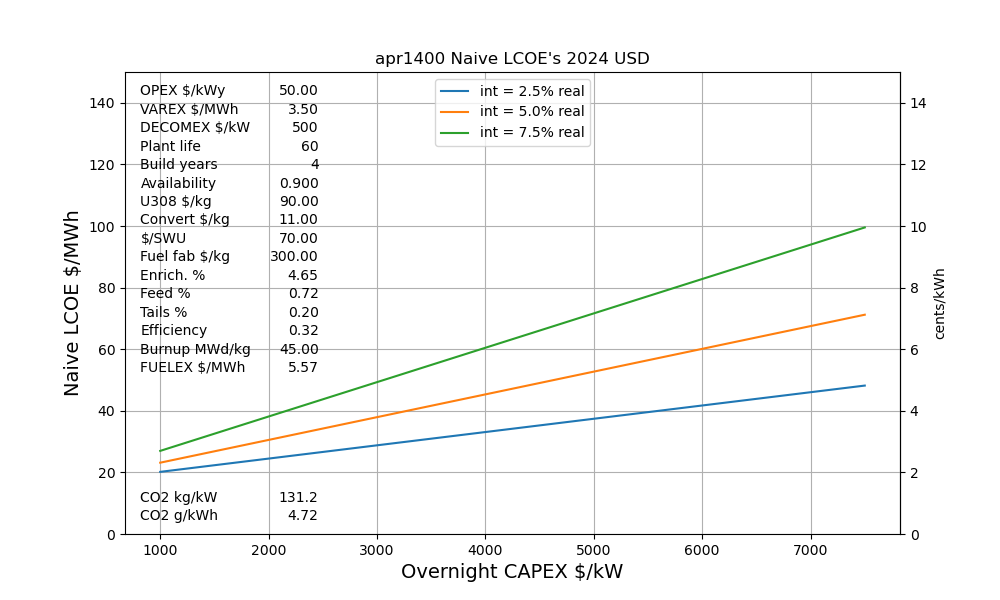
Figure 7. APR1400 LCOE as a function of overnight CAPEX and discount rate
But by the mid-1970’s, the same size plants had an overnight cost of up to $10,000 2024 dollars and more with a very large scatter. Overnight costs are only a portion of the CAPEX. At the same time as the overnight costs were skyrocketing, build times were doubling and tripling, Figure 8. Plants that took 4 years to build in the late 1960’s were taking 10 or more years in the late 1970’s. The 1970’s was a period of inflation and high interest rates. Interest expense skyrocketed.
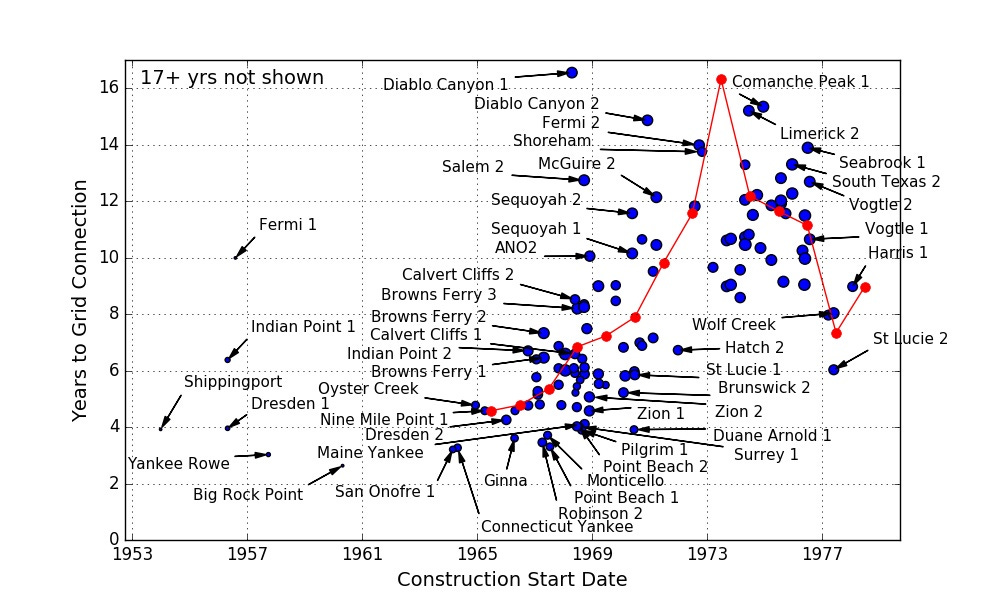
Figure 8. USA Build Times. Red dots are average for that start year. Area of blue dots is proportional to plant capacity. 17 years and more not shown. Data from IAEA PRIS database.
What happened? Through the 1950’s and early 1960’s, the real cost of oil was declining, reaching its all time low in 1967. This forced coal prices down, and coal price was also at an all time low in 1967, Figure 9.
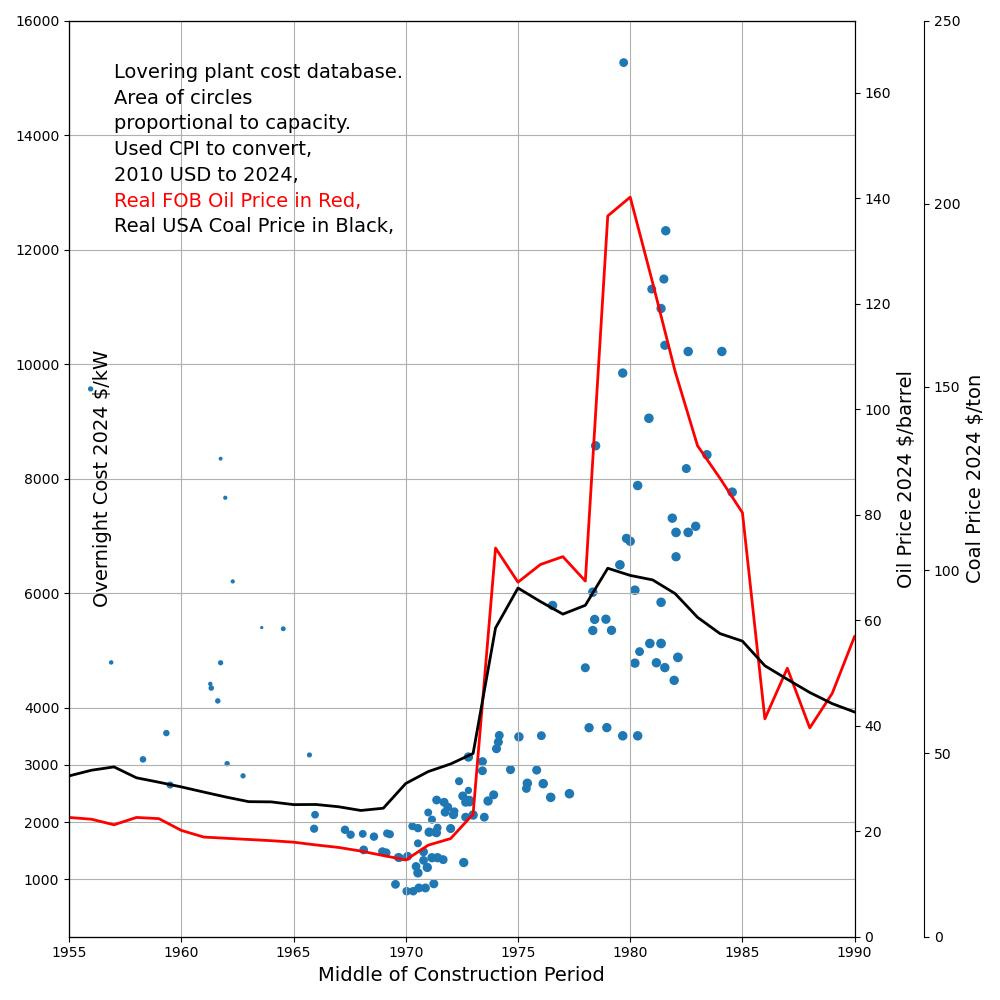
Figure 9. Fossil prices and USA nuclear overnight CAPEX. The oil price index is a little misleading. It’s an average of prices at the loading ports. The landed price jumped earlier due to the tanker market boom in 1967. You can see that in the US coal prices.
But in June of 1967 the Six Day War closed the Suez Canal. The extra ton-mile demand for tankers sent the tanker market into boom, and the landed cost of oil in the West doubled. The Canal closure showed the utilities how vulnerable oil was. They started scrambling to build coal (and nuclear) plants. It was a smart move; but in the next few years fossil was hit by one blow after another. The nationalization of Libyan oil in 1969 led to leap frogging oil prices, culminating in the Oil Crisis of 1973 brought on by the Yom Kippur war. At the same, coal was blasted with a slew of new pollution regulations. The unions piled on as the UMW recognized labor now had massive monopoly power. Coal suffered a series of costly strikes, both union and wildcat.
All this should have been great news for the new guy on the block, nuclear. Thanks to nuclear’s factor of 100,000 advantage in energy density over fossil, a technology that did not exist 15 years earlier, was working its way down a steep learning curve, (left hand side of Figure 6), and in 1967 was fully competitive with coal, when coal was as cheap as it ever was. Nuclear was insulated from both oil price and fossil pollution regulation.
But nuclear’s costs rose in lock step with coal’s. Bupp and Derian’s Light Water is the standard history of early American nuclear. These authors were befuddled:
Coal seemed to be just competitive with nuclear power from light water reactors at about 25 to 30 cents/mbtu in 1970; it still seems to be competitive at about four times that price in 1976.\cite{bupp-1978}[page 97] [Emphasis in the original.]
They need not have been. In 1967, a new omnipotent player had emerged. In 1954, Congress had given the AEC complete and unfettered control over nuclear, both nuclear weapons and nuclear power. As Truman put it, atomic power was “too important to be made the subject of profiteering”. The AEC had to both implement Mutually Assured Destruction, and promote and regulate nuclear power. The first responsibility included making sure everybody was petrified of the bomb.1
Prior to 1961, the Nuclear Power Regulatory Division was just another box in the AEC organization chart, reporting to the General Manager, who had to balance nuclear power’s risk and cost in exercising the AEC’s autocratic power. But in 1959, the AEC quietly adopted LNT, the radiation harm model that claims our bodies cannot repair damage to our DNA, a claim that denies indisputable biology. The AEC did this in part because it heightened fear of the bomb. But LNT also massively magnified the fear of a nuclear power release. In 1961, the Regulatory Division was split off from the rest of the AEC. It now reported directly to the Commissioners. The Division’s job was to prevent a release. Period. Cost was not a consideration.
The Regulatory Division quickly grew and in 1963 moved to its own campus. The Division not only enforced the rules, it made up the rules. Worse, under Section 187 of the Atomic Energy Act, it could change those rules at will and retroactively.
This ability to change the terms of the deal whenever the regulator feels like it is not hypothetical. The first major backfit was a new set of Emergency Core Cooling System rules which put Indian Point 1 out of business in 1974. A 1974 study by the Government Accountability Office of the Sequoyah plant documented 23 changes ``where a structure had to be torn out and rebuilt or added because of the required changes.” This was followed by example after example, Yankee Rowe was shut down 8 years early in 1992 on the basis of a bogus claim of loss of ductility. It’s 40 year license was really a 32 year license. In 2006, the NRC certified the AP1000 design. On this basis, two utilities opted to build four AP1000 plants. In 2009, the NRC imposed a new aircraft strike rule which forced major changes in the design all the way down to the foundation.
Regulatory uncertainty precludes fixed price contracts. You can’t have price competition without a price. The Lovering database identifies 14 US plants that were built with turnkey contracts, all but one of which came in at under $2000/kW in 2024 USD. The last of these plants started construction in 1968. Fixed price is essential to should-cost power. The vendor who builds scores of plants is in a far better position than a utility to manage the project. The utilities know that and, far more importantly, they know that, if they accept anything other than fixed price, the vendor’s incentives all of a sudden change from getting the plant built on schedule and on budget to milking the project for as a much money as possible. That’s why the utilities insisted on fixed price for their coal plants.
Fixed price contracts can only exist in an environment where everybody knows the rules, and nobody can change the rules after the contract is signed. By 1968, it was clear that the Regulatory Division was not prepared to play the game this way. Fixed price had to go. But there was an out. In this period, all the US utilities were regulated monopolies. By signing cost plus contracts, the vendor transferred the regulatory risk to the utility, and the utility transferred the risk to the ratepayer. A regulated monopoly is a system in which the more money the utility spends, the more money the investors make. The incentives are all wrong. Costs and build times explode. But the regulators are happy; the vendors are happy; the investors are happy; and the ratepayers are screwed.
The only limit to this unbridled, dictatorial power was the cost of fossil. If the Division pushed the cost of nuclear above the cost of fossil, license applicants would disappear and the Division would have nothing new to regulate. After 1968, it would also lose the revenue from the application review fees, on which it was dependent.
In 1967, the Division flexed its muscle and published 70 General Design Criteria (GDC). The GDC imposed all sorts of very loosely defined requirements on license applicants and holders which requirements were to be interpreted by the Division on an ad hoc basis. I think it was just a coincidence the the Regulatory Division published the first 70 GDC’s in the same year that fossil began running into hurricane force headwinds. In any event, the combination was a disaster for nuclear power and humanity. As the cost of coal rose, the Regulatory Division quickly pushed nuclear’s cost up against the new limit.
With the doubling and tripling in coal prices, between 1967 and 1975, the utilities’ goal became do whatever you have to do to get nuclear plants built. Rather than pushback against new regulations, no matter how silly or superfluous and engage in time consuming negotiations, the utilities decided to accept anything they thought they could pass on to the ratepayer. As soon as one applicant agreed to a requirement, that became the floor for the next applicant. Rules ratcheted upward with each application, forcing continual design changes.
Starting in 1978, the DOE funded a detailed cost study called the Energy Economic Data Base (EEDB). John Crowley was the guy who headed the team that developed and maintained the EEDB. Figure 10 shows Crowley’s 1982 estimates of the total CAPEX for American nuclear plants, through the 1970’s. The right hand side of the figure are partially projections of what was happening in 1982. The figure is in nominal dollars based on the (projected) year of completion. The total CAPEX increase in dollars of the day is about a factor of 10.
Figure 11 translates these numbers into 2024 dollars using the CPI. Crowley’s numbers show a factor of three increase in real overnight CAPEX, greatly exacerbated by the increase in build times.
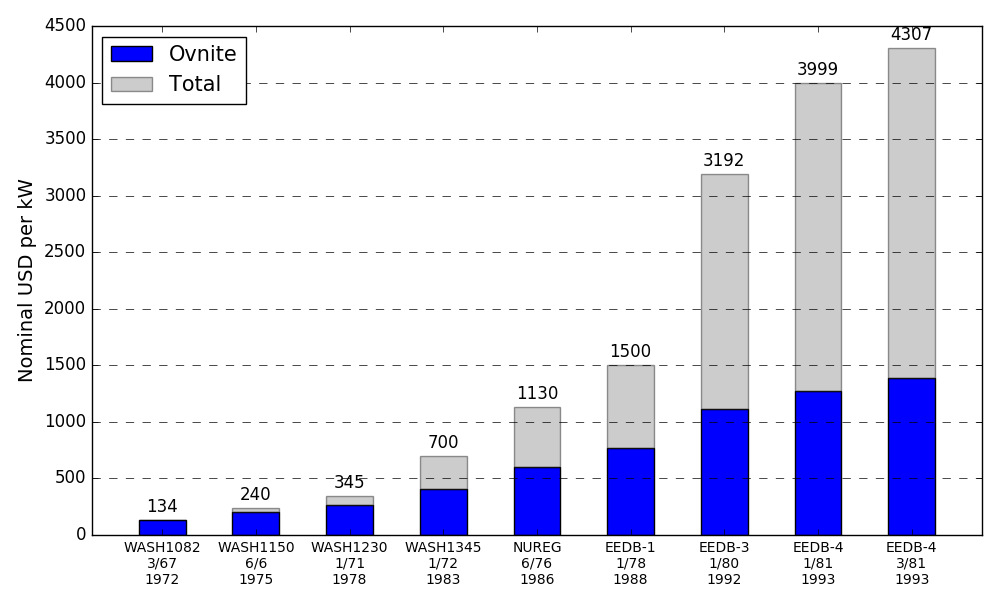
Figure 10. Crowley’s 1982 estimates of USA Nuclear Power Plant CAPEX, \cite{crowley-1982}[Fig 2]
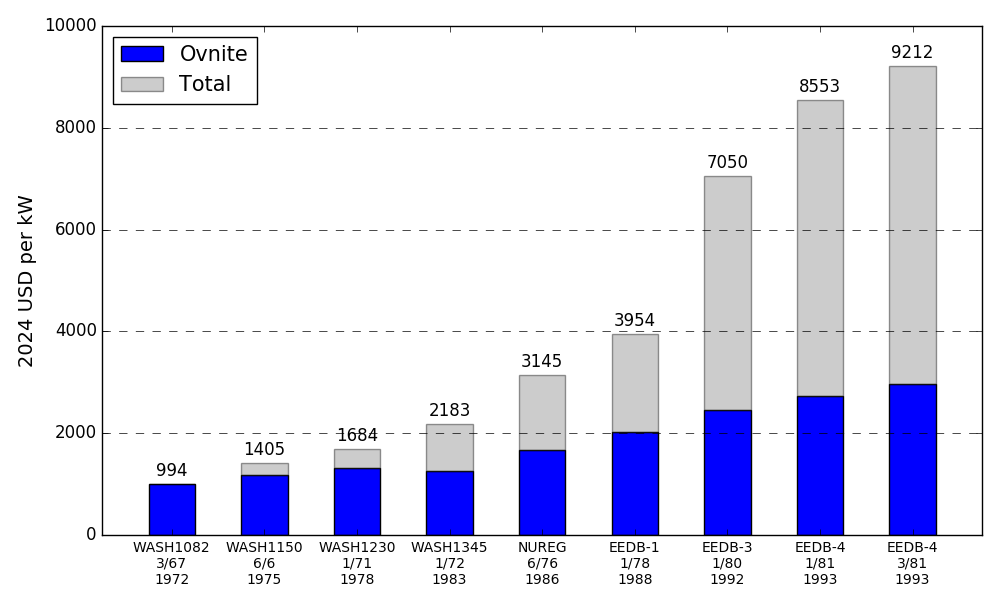
Figure 11. Crowley’s estimates converted to 2024 USD
Loss of cost control in a boom manifests itself mainly in labor and equipment price increases, some loss in labor productivity due to use of inexperienced workers, and longer lead times. But a technology does not get worse during a boom. It does not require more material to do the same job. It does not require more design and engineering per unit. But nuclear’s material intensity rose dramatically in the 1970’s, Figure 12. Concrete and steel for the same plant doubled. Cabling and conduit for the same plant more than tripled.
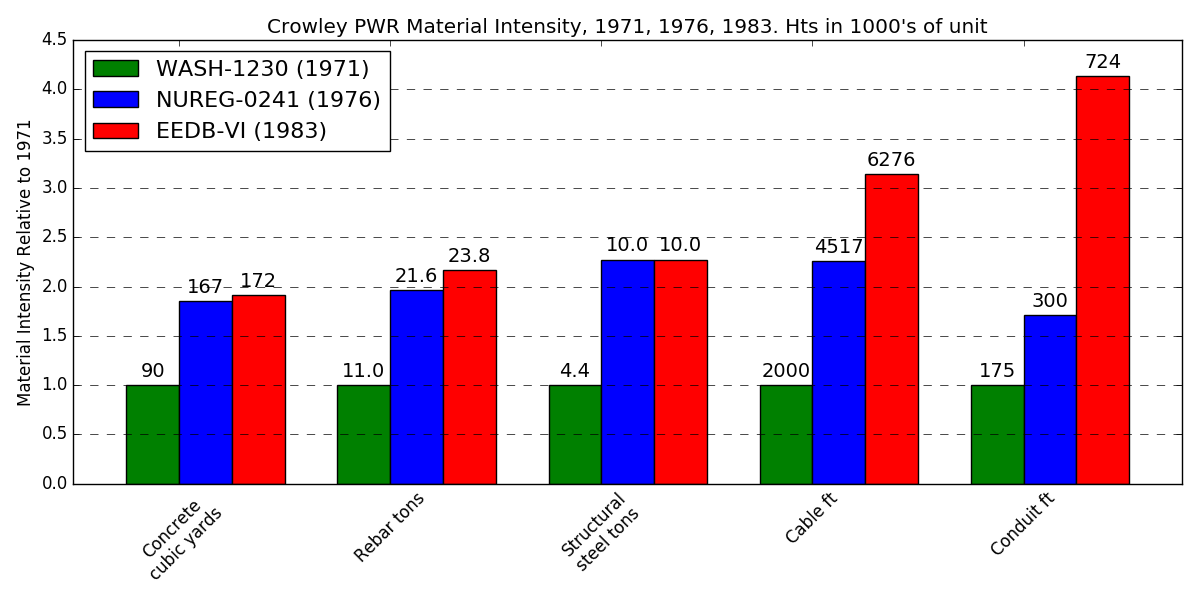
Figure 12.. Crowley’s material estimates, 1971 to 1983. In that period, conduit and cabling should have dropped drastically due to massive increases in bandwidth. But the NRC outlawed multiplexing.
This was a period of rapid technological progress, largely driven by advances in computer technology. Late 1960 nuclear was an immature technology, less than 15 years old. The plant on the right side of these charts were double the size of the plants on the left. Real costs should have dropped substantially in this period.
The labor numbers, Figure 13, are even worse. According to Crowley, craft labor went up by a factor of four.\cite{crowley-1985} Paperwork labor went up by a factor of more than ten. Phung working from essentially the same data found that things get even worse if you go back to 1967.\cite{phung-1985} In 1980, a 1 GWe plant required three times more paperwork labor than it took real labor to build the darn thing in 1967. Boom congestion and diseconomies cannot explain these outrageous numbers.
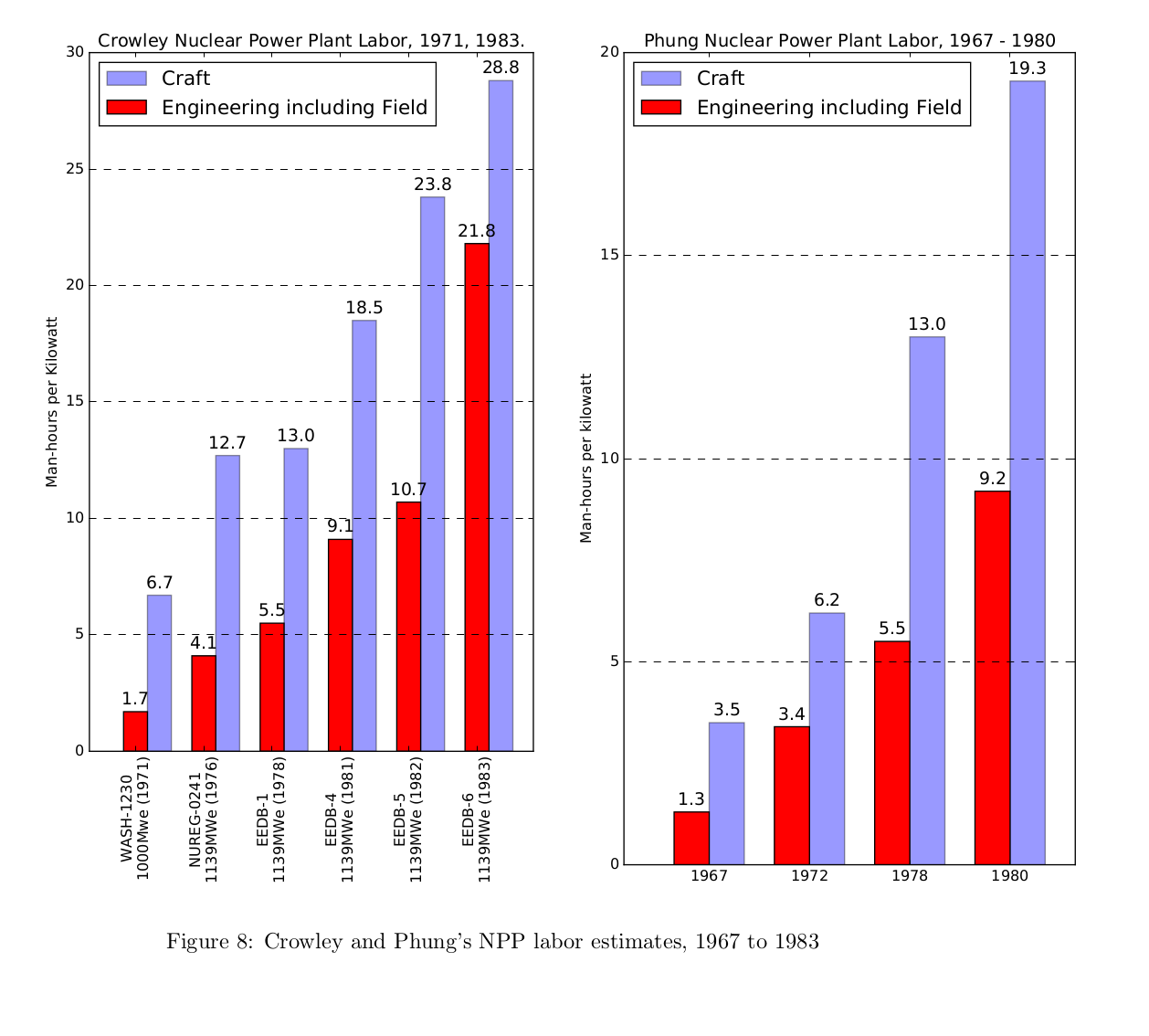
Figure 13. Crowley and Phung’s NPP labor estimates, 1967 to 1983
Nuclear was doomed by a myopic, misdirected, unbridled regulatory system. Few nuclear plants were ordered after 1974, Figure 14, and all of those were canceled. This was five years before Three Mile Island, and in a period where public support for nuclear was more than 70 percent.2
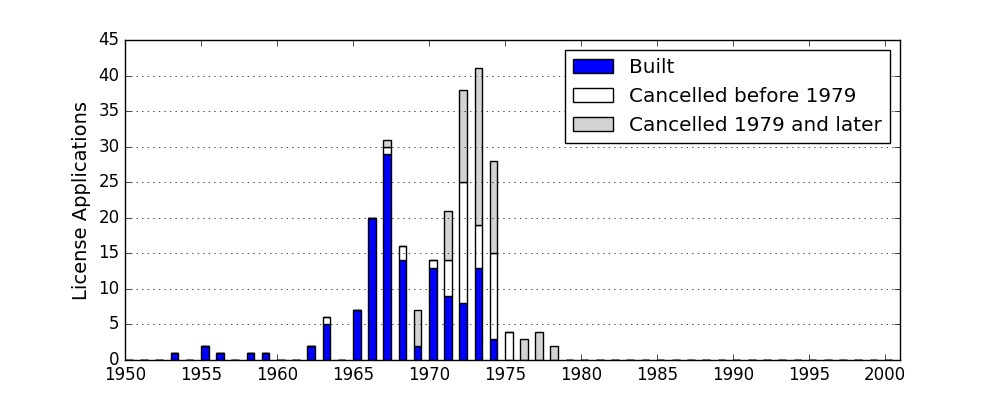
Figure 14. USA Nuclear Power Plant Orders, reference \cite{eia-1997}[Table C-1] Check out the ordering boom in 1966 and 1967. In those two years, 49 plants were ordered totaling 40 GW of power. This became known as the Bandwagon Market.
In 1979, the world economy went into deep recession. Coal reacted to the new reality and steadily reduced its costs in the 1980’s and 1990’s, Figure 9, despite increasingly stringent regulation. But the regulatory ratchet works only one way. US nuclear was left stranded with top of the boom costs. Nuke costs leveled off a bit, but they never came down. US nuclear could not and never did recover.
Coal should be easy to beat
Nuclear power was, can, and should be cheaper than coal, Figure 15.
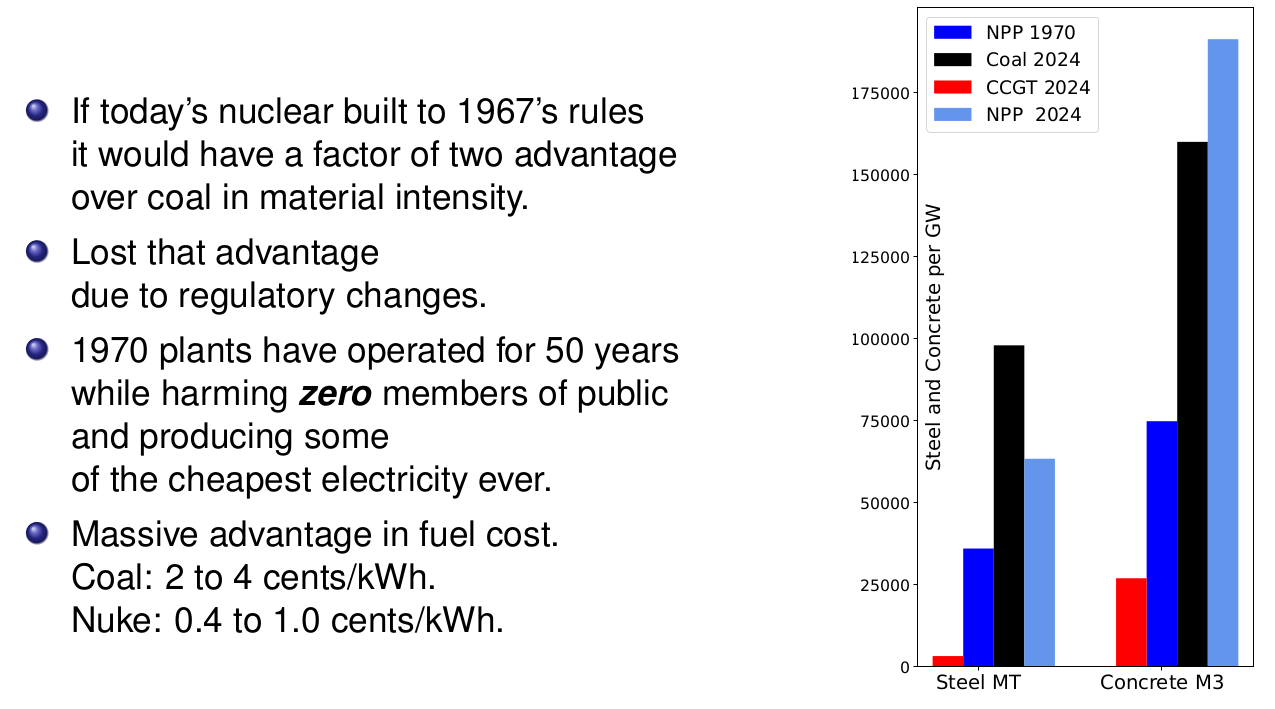
Figure 15. Coal should be easy to beat
The reason why it is not is a tragically misdirected, autocratic regulatory system. We give an omnipotent regulator final approval of any nuclear power plant, and judge him on his ability to prevent a release of radiation. He gets no credit for the cheap, pollution-free, CO2-free, on-demand, power generated by a successful plant, nor the avoided mortality and morbidity that would have resulted if the plant had not been built. But he owns any problems. The regulator responds accordingly; and, since he has the final say, it’s his incentives, not society’s, that determines what happens. NRC Chairman Hendrie put it succinctly “The NRC’s responsibility is [nuclear] safety without regard to economic and social costs.” [Joseph Hendrie, NRC Chairman, 1979] The NRC’s definition of nuclear safety is preventing a release.
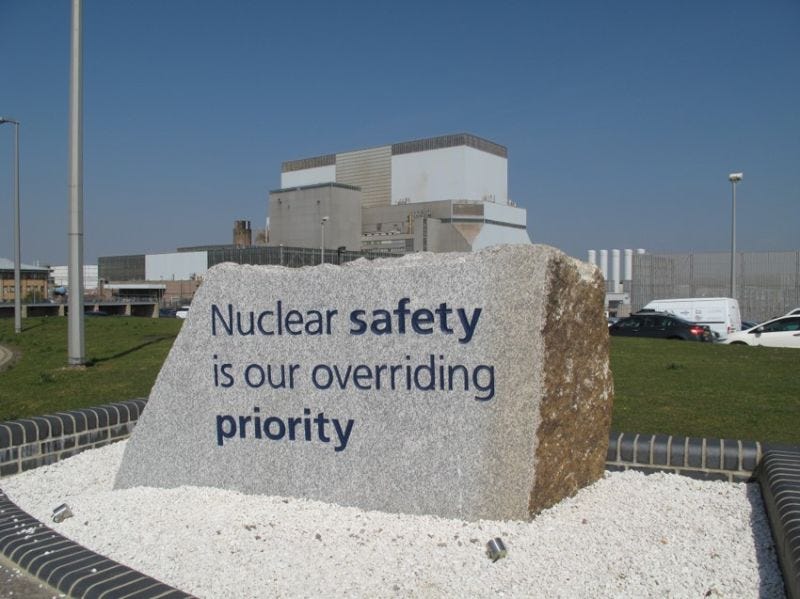
Figure 16. Hinkley Point tombstone.
No. Human welfare is our overriding priority.
This auto-genocidal myopia produces technical stagnation, a demoralized workforce, lack of competition, and shoddy quality. The end result is nuclear power that costs five or more times what it should-cost and build times that are three or more times longer than they need be. This in turn means nuclear is replaced by far more harmful technologies. It means nuclear can never be cheaper than the competition, which means humanity is far poorer than it could be. The greatest health hazard of all is poverty.
In the NRC’s world view, making people poorer is unimportant. Global warming is not their business. Harm from alternate sources of electricity is not a consideration. Evacuation and exile costs can be disregarded. The only thing that counts is radiation harm, based on a harm model that is biological nonsense. It is a preposterously blinkered outlook; and it is costing humanity dearly.
This problem is man-made. What is man-made can be man-unmade. We must dump the current auto-genocidal regulatory system, and adopt a variant of the system that has provided us with the unprecedented wealth and health that we current enjoy. That is precisely what the Nuclear Reorganization Act does. Pass the Nuclear Reorganization Act.
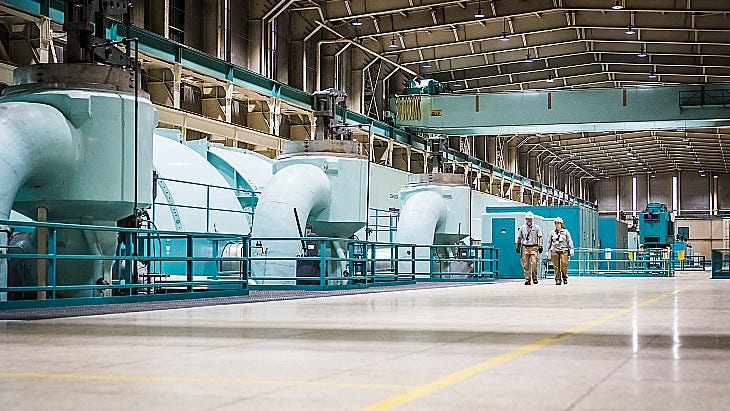
Figure 17. Oconee turbine hall. 53 year old Clean Energy. Thank you, Gen Greatest.
Their quandary was captured by Karl Darrow, an important member of the Manhattan Project, who wrote to a colleague: “I take it that there are two main objects. One is to please the public with the prospect of beneficial uses of atomic power, and the other is to scare it out of its boots by threatening it with new weapons.”
When Three Mile Island 2 melted down in 1979, the reactor was the youngest unit in the US fleet, subject to the most stringent regulation.
Since you mentioned Paul Ehrlich, I must point out that he wasn't just anti-nuclear, but anti cheap energy in general. In 1975, he wrote:
"In fact, giving society cheap, abundant energy at this point would be the moral equivalent of giving an idiot child a machine gun. With cheap, abundant energy, the attempt clearly would be made to pave, develop, industrialize, and exploit every last bit of the planet—a trend that would inevitably lead to a collapse of the life-support systems upon which civilization depends. "
This is of course the complete opposite of what really happens. Societies with an abundance of energy create wealth, and wealthy societies have lower birthrates, which is what Paul seemed to want more than anything. They also clean up their environment.
Meanwhile populations in energy-poor societies are still growing, and they pollute like mad because nobody deals with pollution until they have enough excess income to be able to afford it.
I've despised that man and his writings since I was in college in the late 1970s.
Jack, several times over the past few years your posts have stated the NRC mission (and responsibility) is for ensuring nuclear plant designs (and operation) insure "safety."
Read NRC MEMORANDUM AND ORDER (CLI-81-10}; (note below)
doesn't it clearly say, in the Commission's own opinion and words, that safety is the responsibility of everyone who touches commercial nuclear power EXCEPT the NRC. NRC is responsible for ensuring a plant is designed (and built) according to approved codes and standards, and they do it by inspections (and document reviews). An important part of that process is by QA. But as you have pointed out several times using Korean shipbuilding as an example, QA by the appropriate end user parties is key. If all NRC does is document review against codes and standards, can't that be done by a competent administrative clerk type employee with a thorough checklist? What do we need the NRC for, just because the law (Atomic Energy Act) requires it?
Note: This document was the Commission response to the TMI2 owners trying to sue the NRC for the TMI2 industrial accident. I can't seem to copy/paste that document into this comment. If you can't find it in NRC ADAMS (or other) archives, I can send it to you as an email attachment.