
The NRC Swarm

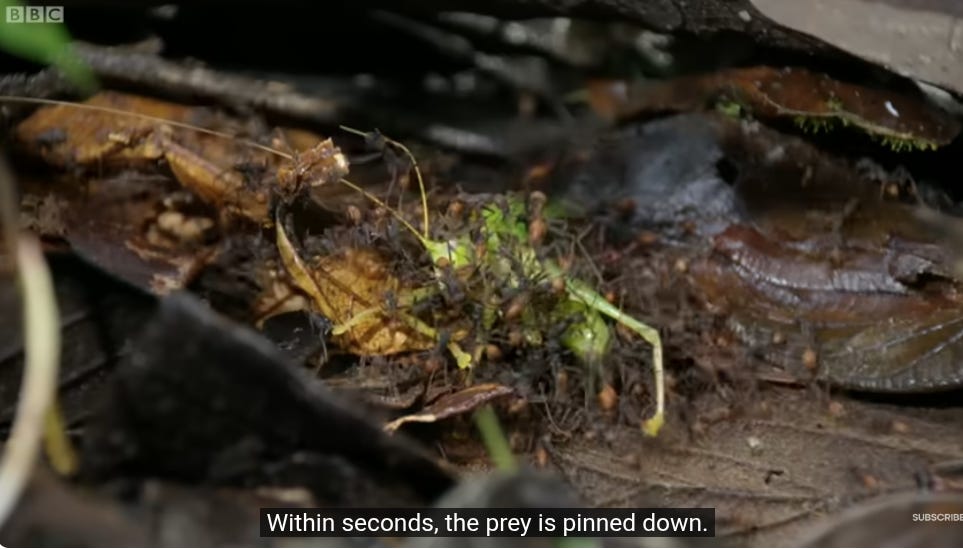
Figure 1. Schematic of nuclear developer (green) going through the license approval process.
He has erected a multitude of New Offices, and sent hither swarms of Officers to harass our people, and eat out their substance.[Jefferson, Declaration of Independence]1
The other day I was talking to a colleague who has had a long career in nuclear power, 30 or more years of interacting with NRC employees. He was disputing my contention that US nuclear’s overriding problem is the NRC. He pointed out that an individual bureaucrat would laugh at the idea that he is all powerful.
He’s right. All that apparatchik can do is follow the rules. But the overall system has autocratic power. It is all powerful, It can only move incrementally, but the fact that the whole system is driven by its overriding priority of reducing radiation exposure means that it moves inexorably to tighter and tighter requirements. And we end up with nonsense like nuclear plant workers carefully stepping around floor drains, to avoid “contaminating” their shoes with naturally occurring radioactive atoms, and setting off alarms at the next check point.
It’s like a swarm of army ants. An individual ant is nearly blind and powerless; but that swarm destroys everything it gets its pincers on.2 Both the ant swarm and the NRC swarm have limits. Neither can completely destroy its ecosystem. It must have something to feed on. In the NRC’s case, this means that it can’t push the cost of nuclear net of taxpayer subsidies above the cost of the dispatchable competition.
That limit rose dramatically when the cost of fossil skyrocketed in the very late 1960’s and early 1970’s. Nuclear’s cost rose in lock step. Here’s a quote from Bupp and Derian’s Light Water, the standard history of early US nuclear.
Coal seemed to be just competitive with nuclear power from light water reactors at about 25 to 30 cents/mbtu in 1970; it still seems to be competitive at about four times that price in 1976.[12][page 97] [Emphasis in the original.]
The cost of nuclear power went from under $1000 2024 dollars in 1967 to over $10,000/kW by 1975, based on year of construction start. Most of the 1967 plants are still operating and are licenced into the mid-2050’s. They have harmed exactly zero people by radiation.
We are now seeing another dramatic weakening of the NRC swarm limit. As a by-product of the concern over CO2 emissions:
1) The willingness of politicians to subsidize nuclear with taxpayer money has exploded.
Based on the NuScale experience, at least $700 million taxpayer dollars blown on a design that should never have made it to the drawing board, I would estimate that at least a third of the multi-billion dollar price of an NRC license is paid for by the taxpayers.3 On top of that, nuclear has been awarded a blatantly regressive 1.5 cents/kWh production tax credit. 1.5 cents is roughly half what nuclear power can cost and did cost in today’s money. These subsidies merely give the NRC swarm more room to push costs up.
2) The only other source of dispatchable electricity on most of the planet is being effectively outlawed in the West.
This is a reprise of the 1970’s Oil Crisis on steroids. A leader in this effort has been the UK. The evolutionary response has been the development of a particularly aggressive swarm, whose scientific name is the Officium Regulatarium Nucleare, common name ONR.
The ONR swarm took what was already the world most expensive big reactor, fully approved and building or built in France, Finland and China, and required 7000 design modifications, which added 25% more concrete and 35% more steel to the already hopelessly over-designed EPR. The ONR uses a non-prescriptive, risk informed regulatory approach, which what many “reformers” are asking the NRC to do more of. EDF just announced another delay to Hinkley Point C, which will push the cost of the plant to over $20,000/kW.
That cost will soon be exceeded. With the loss of the fossil limit, the only limit left is blackouts and impoverishment. The UK may be approaching that limit.
There is only one way of handling these swarms. Eradication. We must totally rethink the way we regulate nuclear power. Pass the Nuclear Reorganization Act.
People tend to forget that the Declaration is largely a long list of gripes.
I’m often asked to pinpoint the cost of this or that NRC regulation. That’s like asking a swarm victim: how much damage did each individual ant do?
These licences are inherently monopolistic. The developer is paying for his moat. Forcing the taxpayers who are also ratepayers to provide a part of that money is like making a person who is about to be assassinated dig his own grave.
Well done for raising the simplest most telling question about the cost of building nuclear electricity generation, a question which seems not to be asked anywhere else.
Jack, That’s a great headline picture!
Made me chuckle, the funniest things are true.
Eradication…. I agree, but it’s too entrenched. It would take literally a bomb to remove the NRC tentacles.
Unfortunately, it’s going to take decades to remove the layers of regulations.